
SummerFAB Greenhouse
Community Engagement and Furniture Design
Industrial Design Faculty Leader
4 Week Program + 3 Week Build
SummerFAB Pre-College Program 2025
Wentworth Institute of Technology
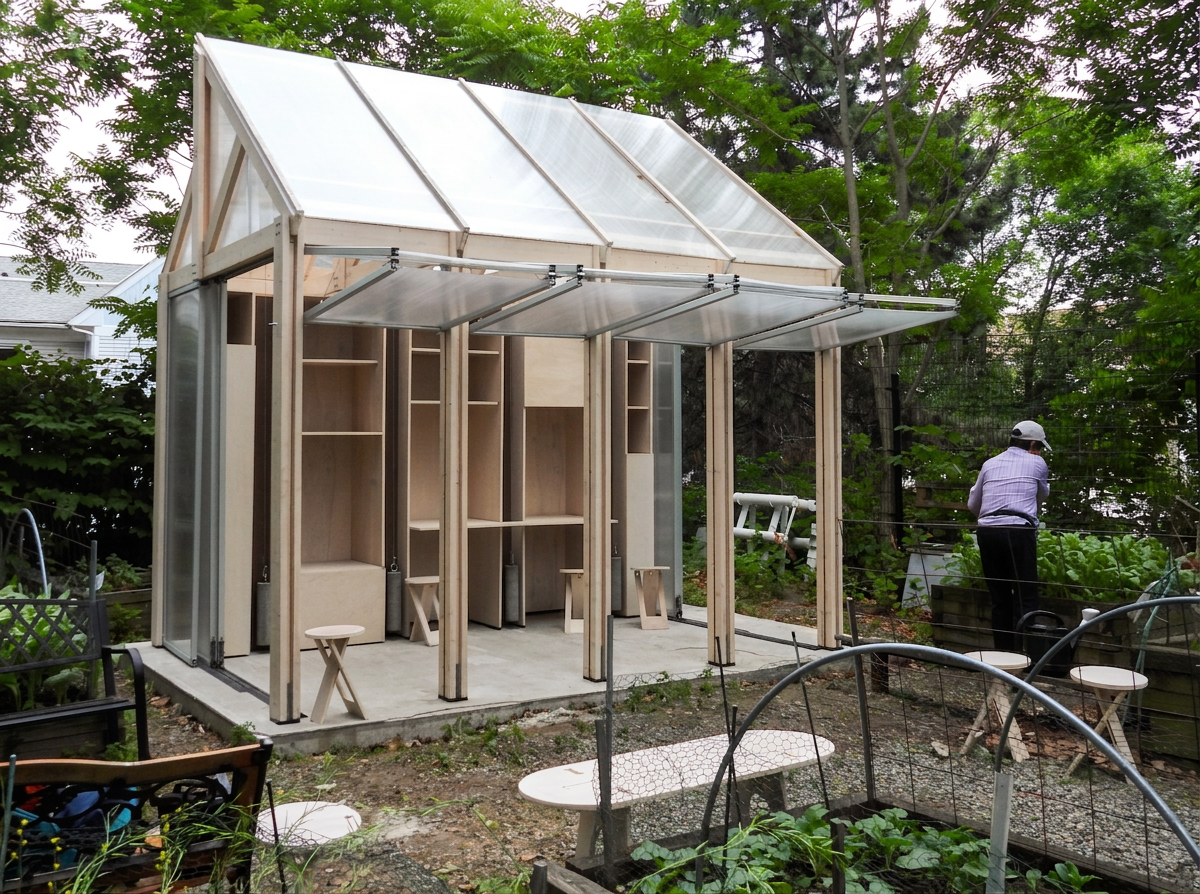
SummerFAB partnered with Sociedad Latina, which operates in Boston’s Mission Hill neighborhood.
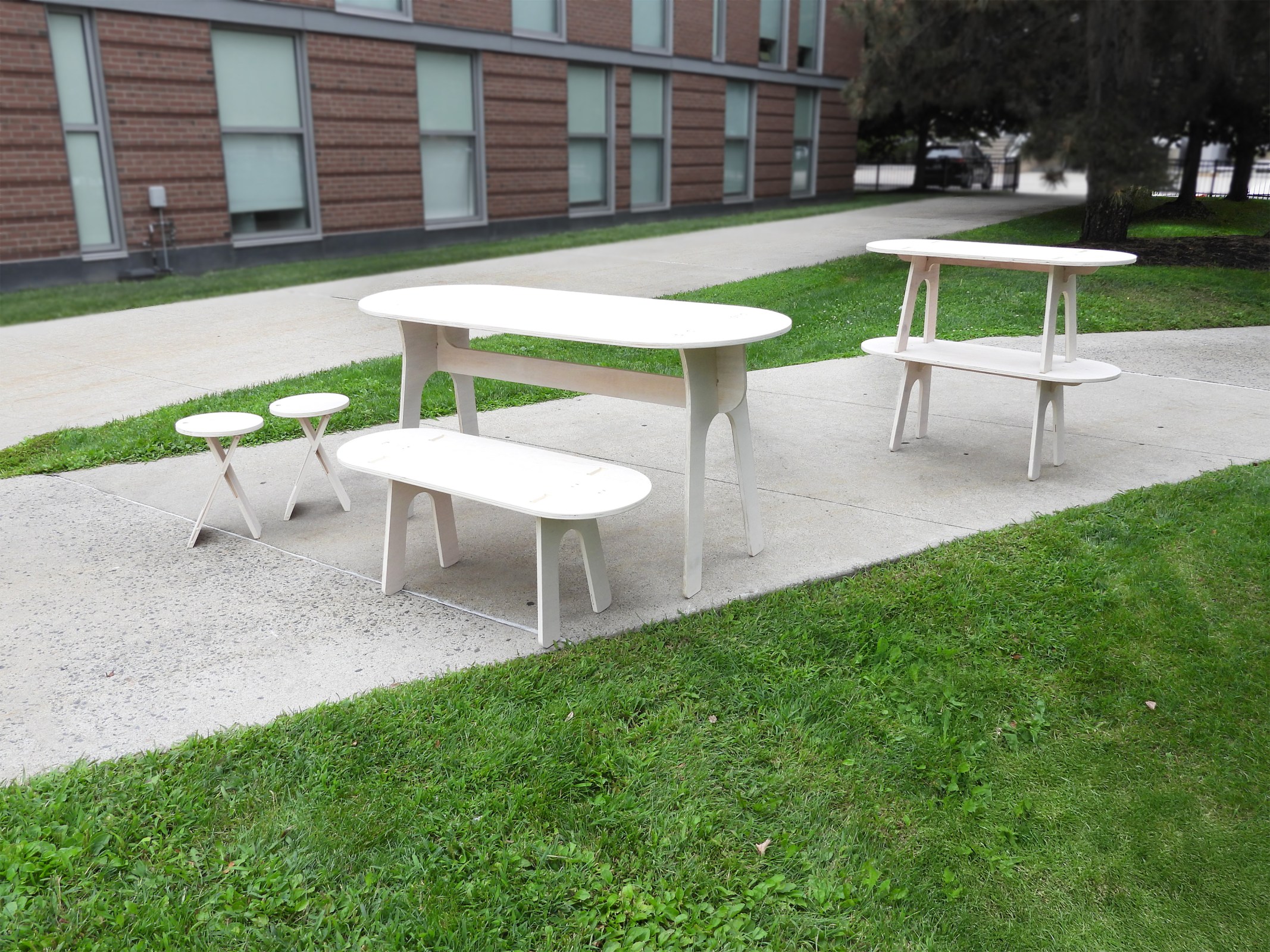
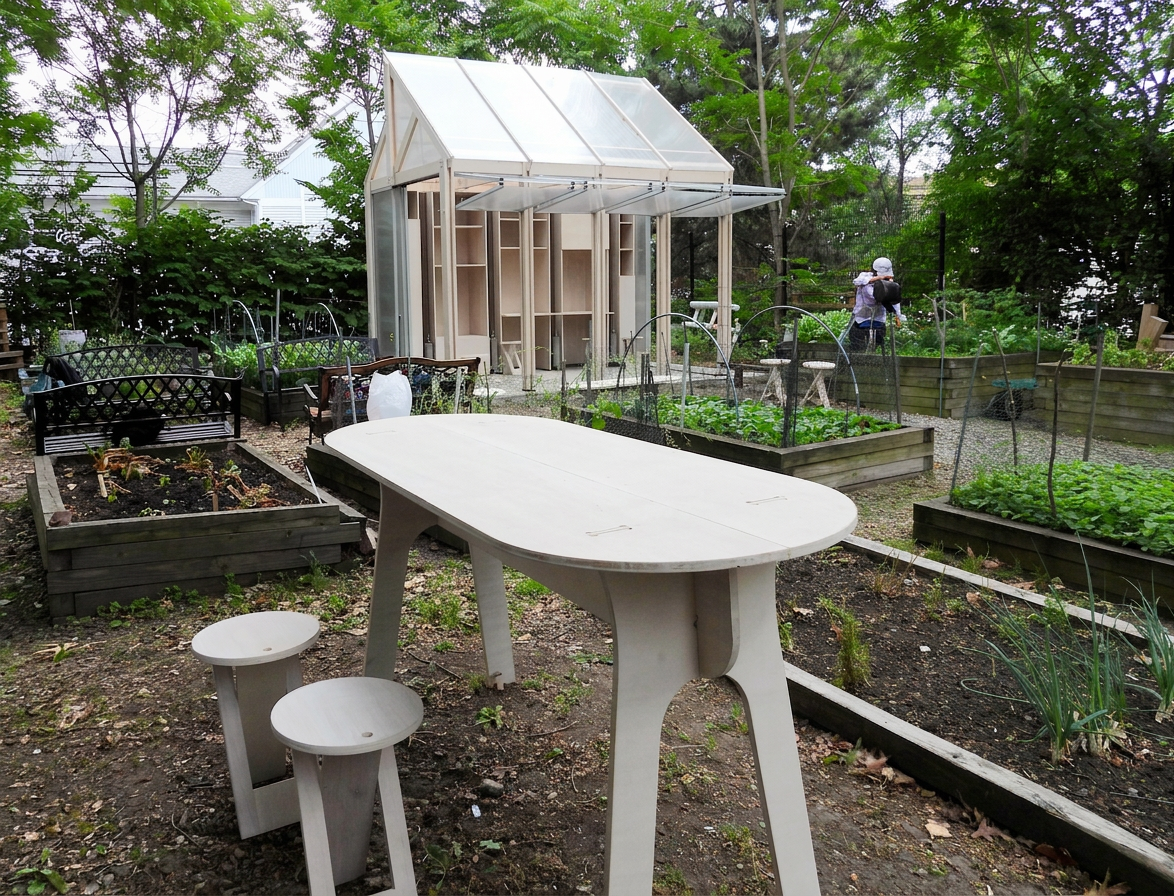
As part of an architecture and design program, we designed and built a greenhouse and modular furniture for plant storage and summer gatherings.
1. Community Research
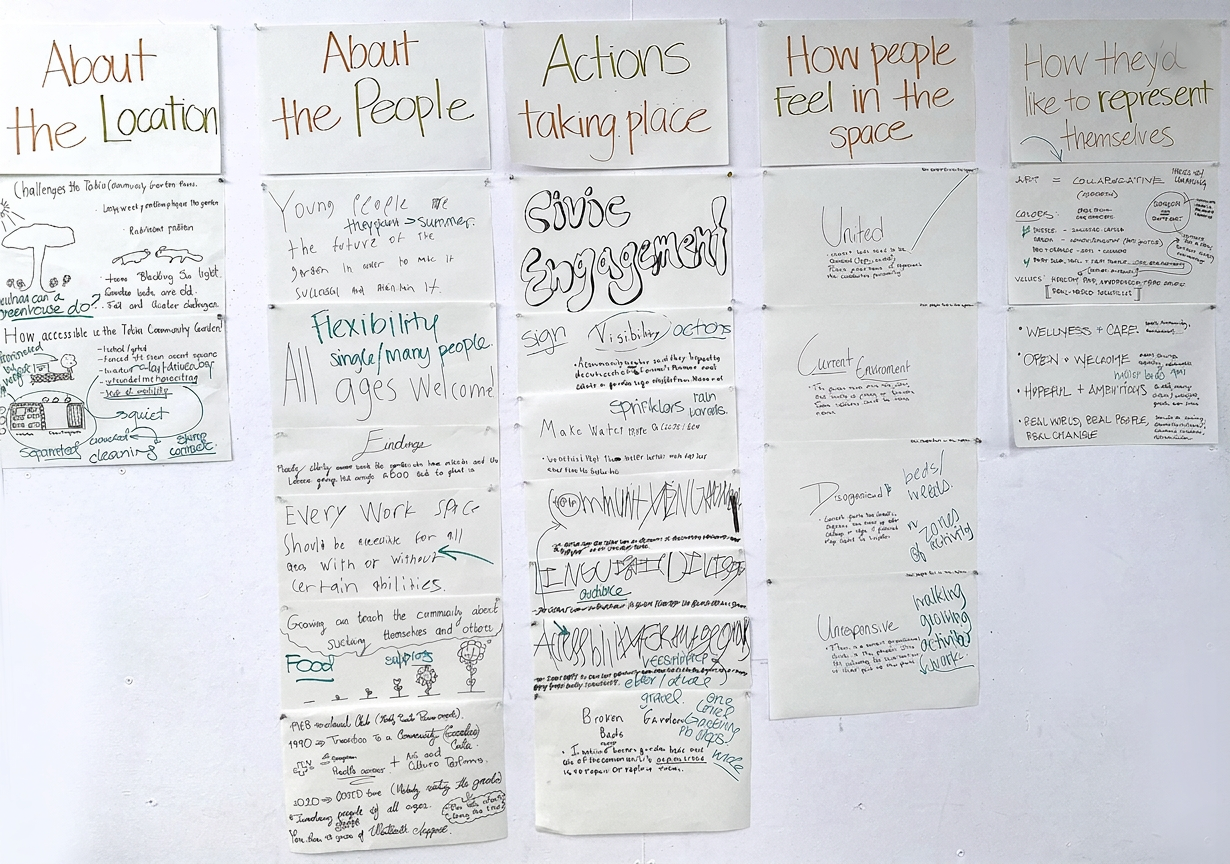
I introduced the high school students to community research. I organized the students into four groups, each directed by a TA who served as a facilitator to develop questions for the community. To ensure there was minimal overlap between the different groups’ questions, I designated question categories:
About the location
About the people
Actions taking place
How people feel in the space
How they’d like to represent themselves
The SummerFAB team visited the community garden. We gathered with Sociedad Latina’s leadership and youth volunteers to ask our questions.

Synthesizing as a Group
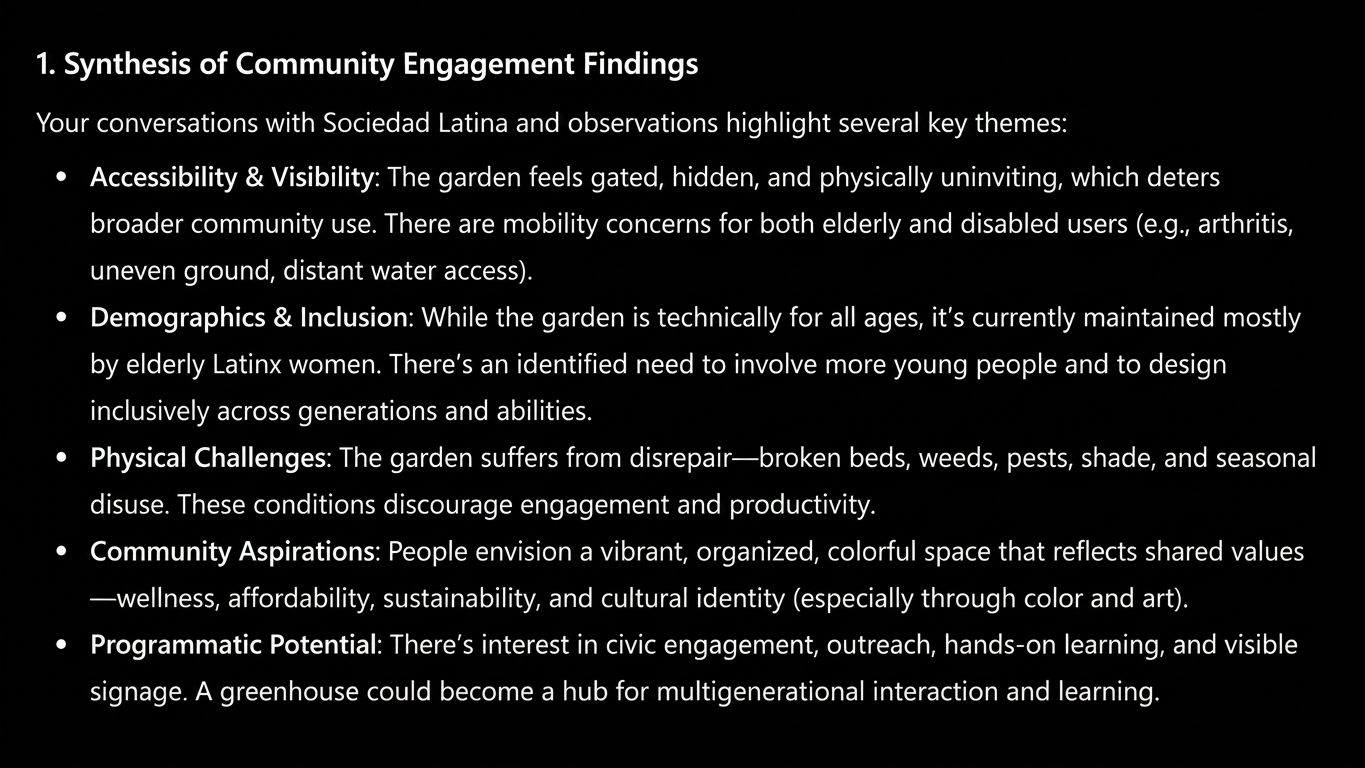
We reconvened in the studio, where each group documented pieces of evidence on separate sheets of paper. After a group synthesis, I provided context about our program’s mission and prompted ChatGPT to synthesize our findings, identify potential human biases, and acknowledge its own biases as an AI.
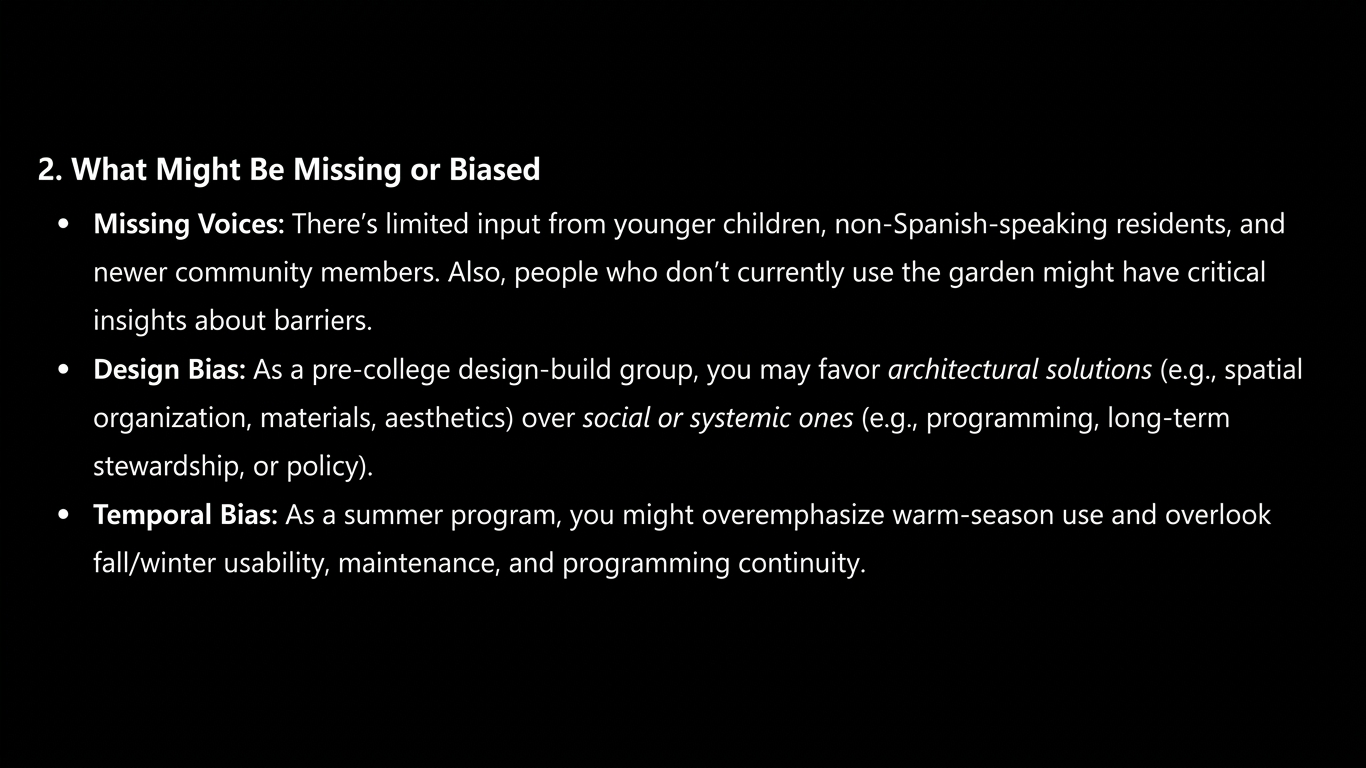
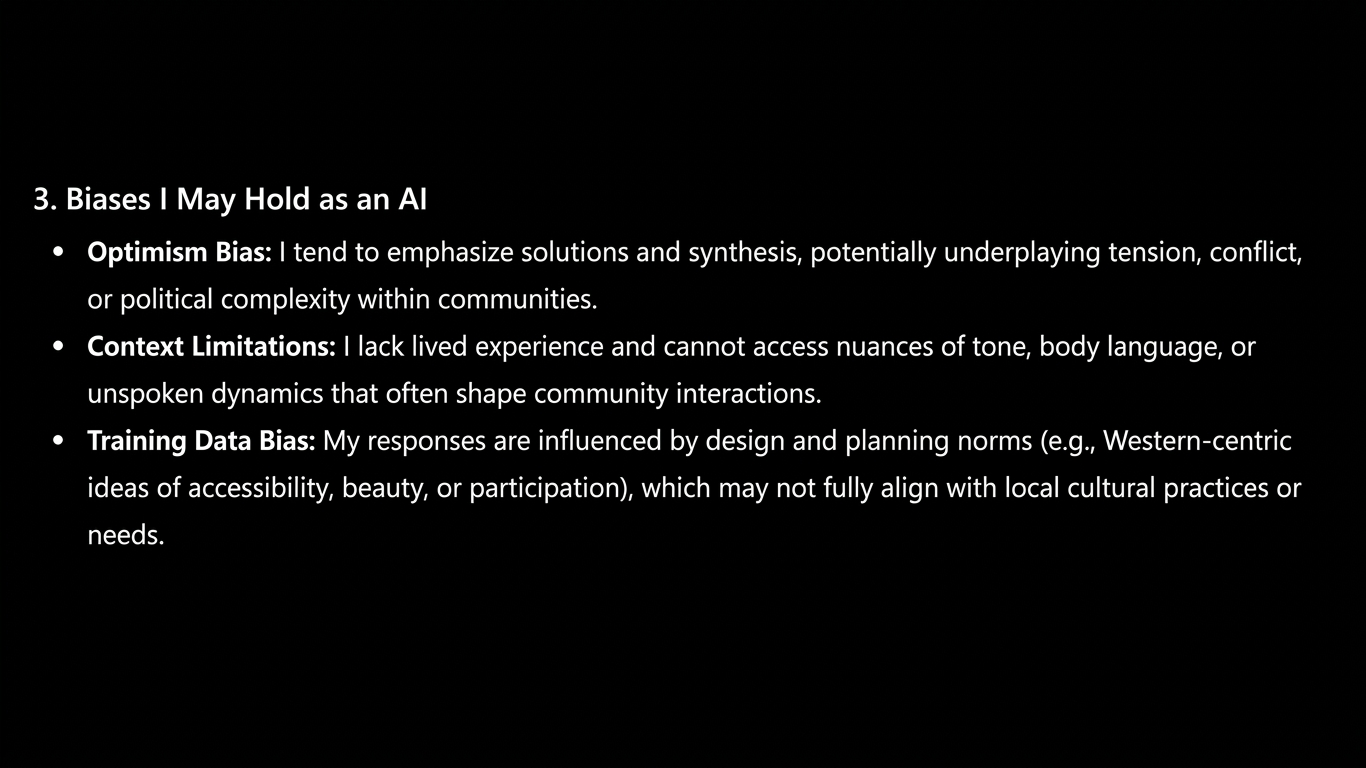
Points Discussed with the Students
False Statements: ChatGPT stated that the garden is “currently maintained mostly by elderly Latinx women,” which we did not mention in our collection of evidence.
In-Person Nuances: ChatGPT acknowledged that it “cannot access nuances of tone, body language, or unspoken dynamics,” which caused us to consider human-to-human dynamics as critical evidence of our research.
The AI bias-checking exercise demonstrated that both human researchers and AI introduce biases into community research. However, we can use AI to synthesize findings while maintaining a critical mindset about its limitations.
2. Furniture Design
My second leadership role involved designing the furniture that accompanied the greenhouse.
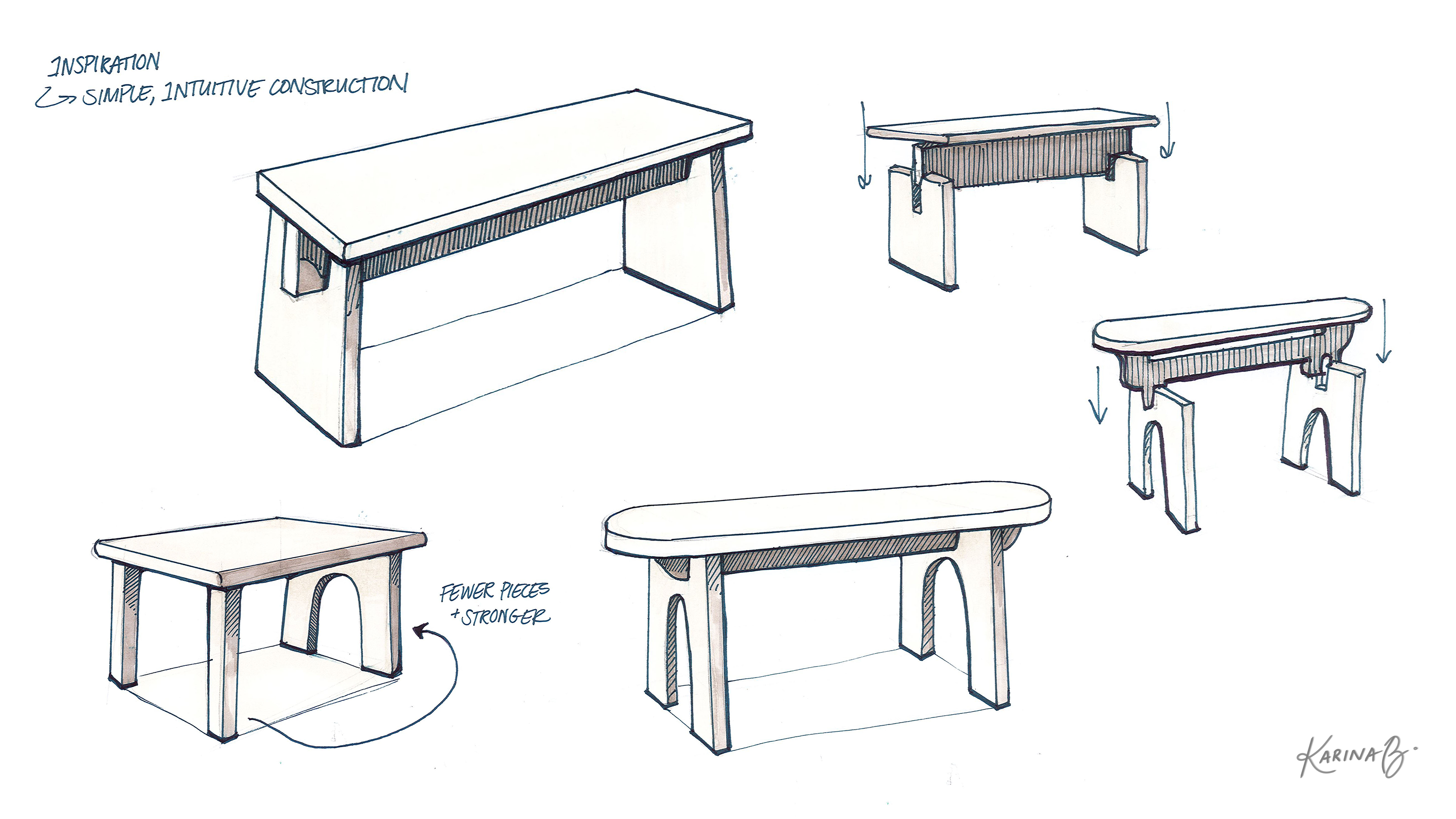

I drew initial furniture designs that could be fabricated from 3/4 inch, 4 x 8 foot plywood sheets.

I CAD modeled the furniture in SolidWorks and exported its drawings into Rhino. I laser-cut scale models in 1:8 scale while teaching the students how to use the laser cutter.
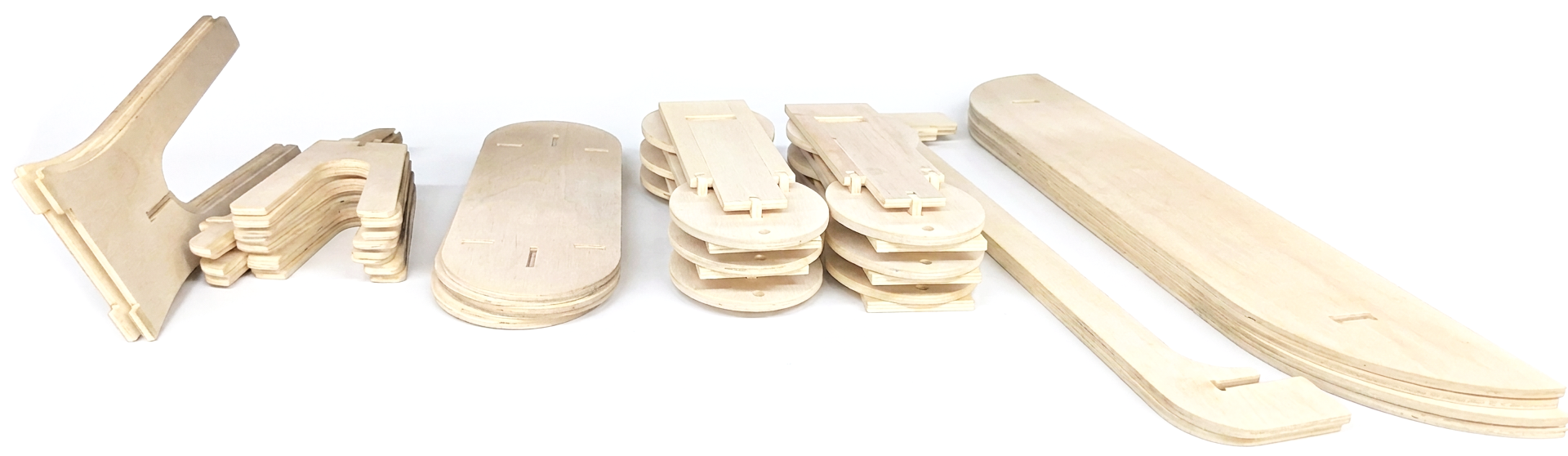
I edited the furniture designs into fewer pieces to make assembly and disassembly easier.
We reverse engineered the Tallon stool!
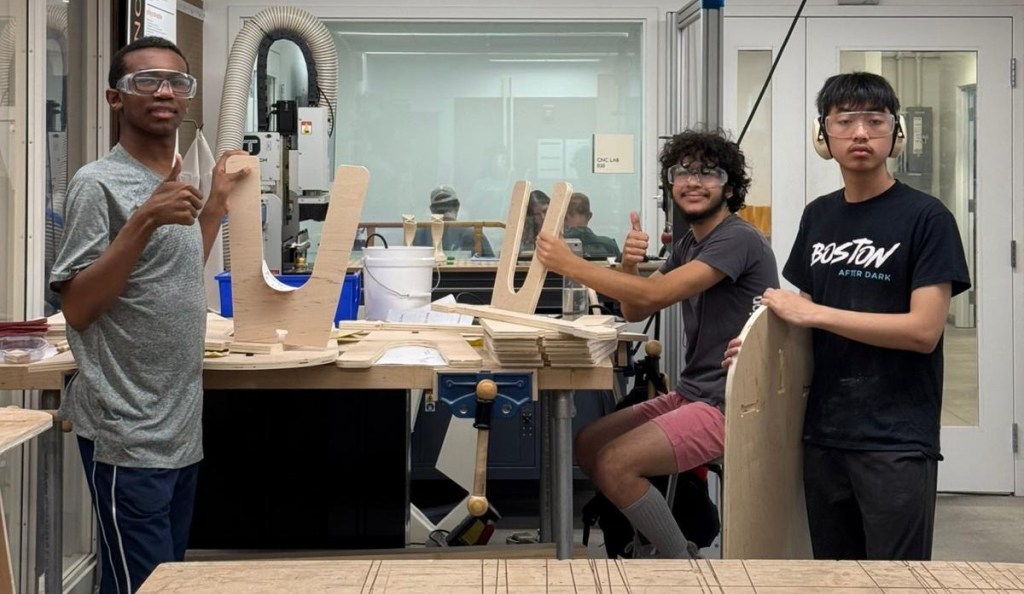
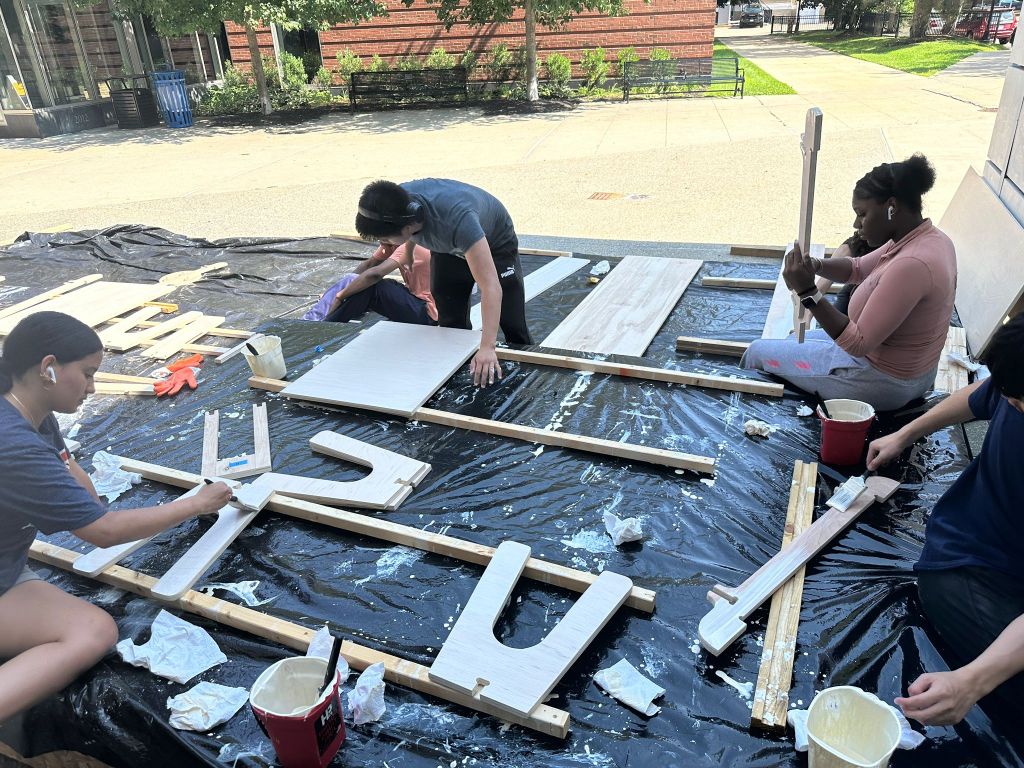
The furniture was cut with a CNC, sanded, stained, and finished. We made 2 tables, 6 benches, and 12 stools.
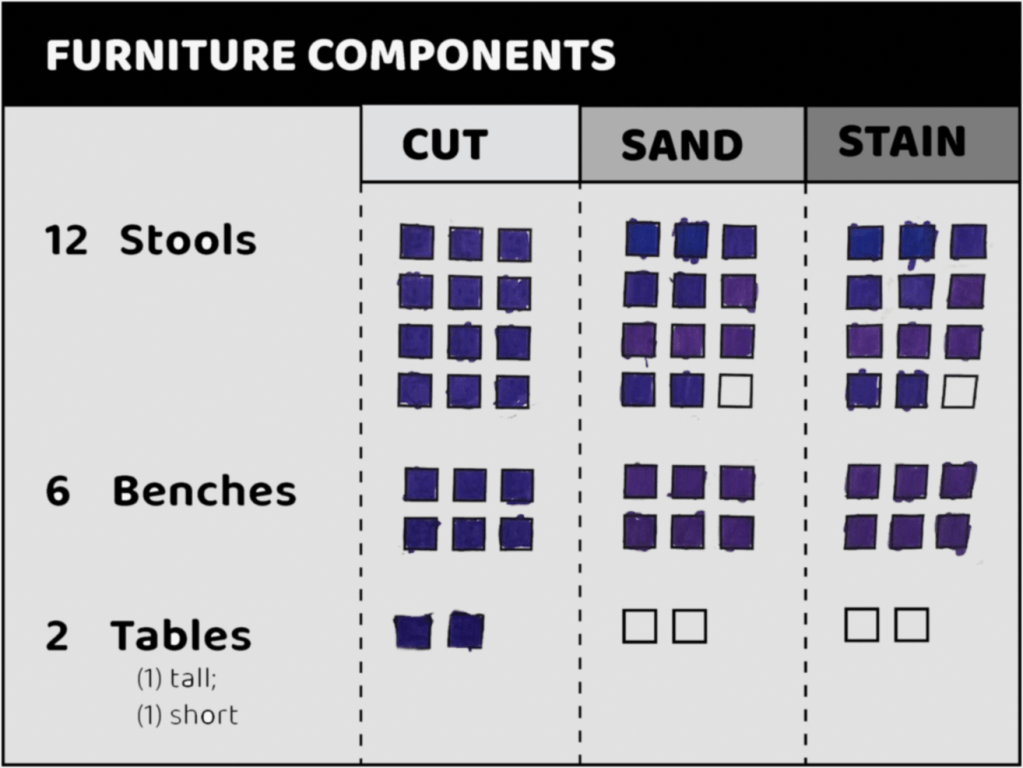
Project Management
As plans changed, we met consistently and strategically to adapt and coordinate the project.
We organized the info into easy-to-find locations in Google Drive and printed it for the wall.
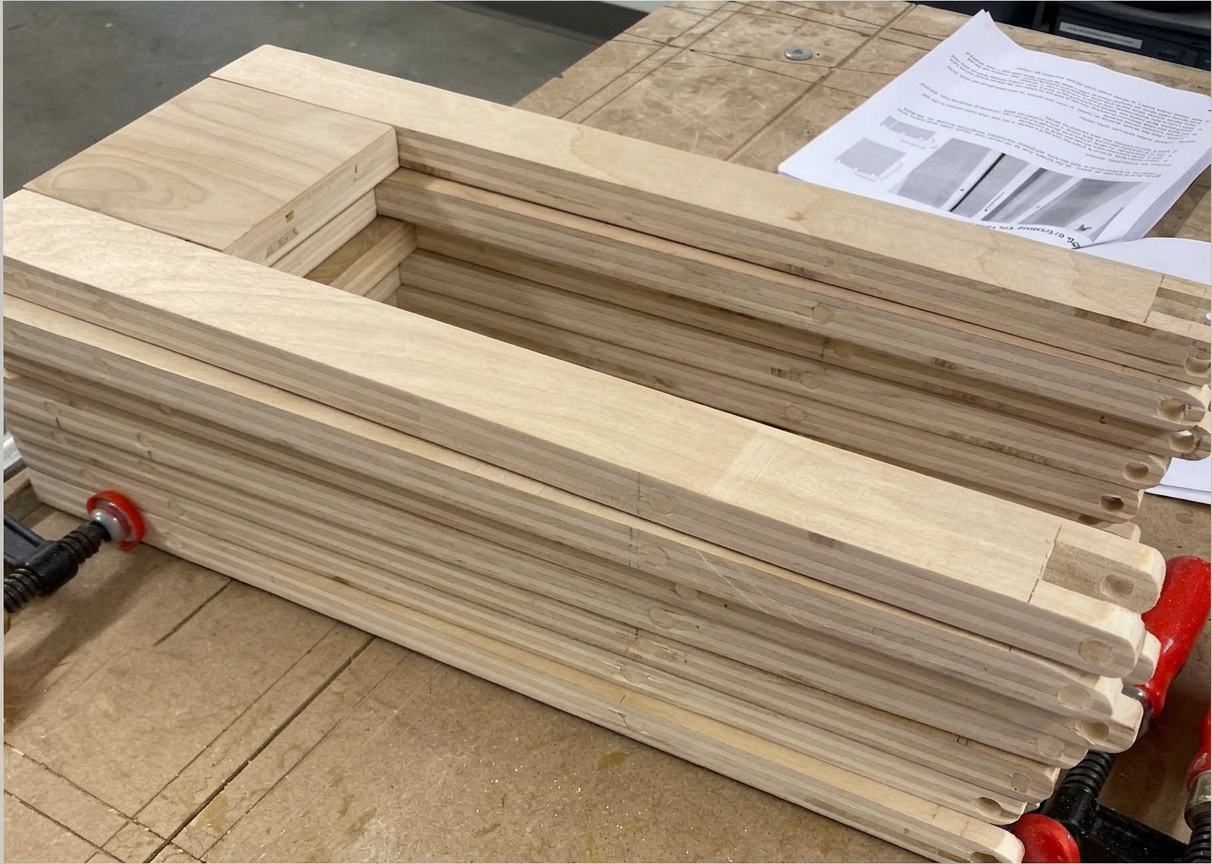
Consistency and Effort
We used jigs to assist students with repetitive tasks, including cutting, drilling, and gluing.
Student Experiences
Peer Connections
All high school students responded “yes” when asked whether they had built many connections with their peers. One student elaborated, “Yes, they were very easy to talk to and fun to get to know.” Another student stated, “All of my peers were friendly and supportive. I found that it was very easy to make friends.”
Confidence in Skills
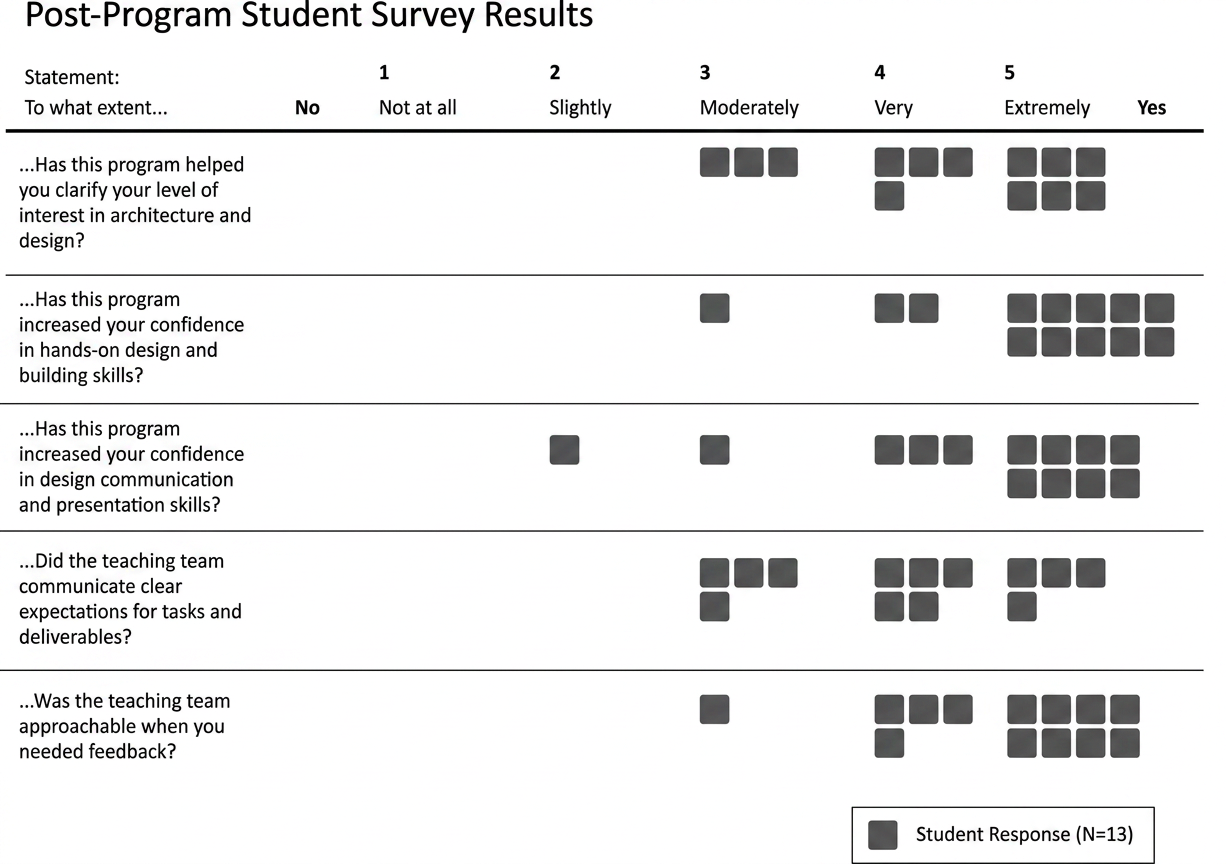
The post-survey results reported that students increased their confidence in two design skills that they often practiced: hands-on design and building skills, and design communication and presentation skills. When asked which aspects they enjoyed most, three students mentioned sketching, two mentioned scale model-making, and nine mentioned hands-on building.
One student specifically reflected on how their favorite aspect was designing, which brought all the skills together: “I really enjoyed the design portion, it was really insightful and informative. I loved all of the talks and discussions of what we can do to make the greenhouse the best it can be.”
Takeaways
Community research positively reinforced the students’ commitment to the project. Organized research groups helped them gather different perspectives while minimizing overlapping questions. In future projects, I will continue using structured research categories to help younger students.
AI can support research synthesis, but students need to critically evaluate the ouput. I led discussions on how AI is be useful for identifying patterns, however, judgment and conclusions should still involve designers.
Large fabrication projects should involve many structured tasks for younger students. Simplifying into fewer furniture pieces, creating jigs for repetitive tasks, and documenting the project allowed the high school students to contribute directly to the final outcome.
Clear planning and frequent communication is essential. I plan to continue establishing clear systems to help students and staff quickly understand priorities and responsibilities.
Special thanks to Samuel Maddox (Architecture faculty), Andreas Armenis, Loretta Stephens-Smith (Pre-College), Daryush Dehnavi (Lab Tech), Ramadani Abdul-Aziz, Olivia Sylva, Mayeline Merchan Nocove, Angela Alvarez (Teaching Assistants), and Sociedad Latina for their contributions, all of whom were instrumental to the success of this project.

